Coastal living brings fresh air, bright views, and demanding outdoor conditions. Salt spray can settle on chair frames, table legs, and balcony railings. Strong sunlight may also fade finishes and weaken unsuitable materials. This raises an important question: why choose aluminum furniture for coastal environments? Aluminum offers a practical balance of corrosion resistance, low weight, and long-term usability. It can support relaxed breakfasts, windy afternoons, and busy family gatherings without feeling excessively heavy.
This guide examines aluminum through material performance and everyday experience. Quality aluminum furniture usually includes protective powder coating, sealed joints, and stainless steel hardware. These details matter near beaches. A powder-coated frame can keep its color, while properly designed drainage prevents water from collecting inside the structure. Moving a lightweight lounge chair before a storm is also easier than moving a solid steel piece. Small design choices often make the largest difference.
Still, aluminum is not perfect. Cheap frames may dent, scratch, or develop loose connections over time. Dark finishes can become hot under direct summer sunlight. Coastal furniture also needs simple care. Rinsing salt residue with fresh water and checking fasteners can extend its service life. Personal experience shows that convenient materials still require attention. Choosing aluminum should therefore involve more than appearance or price. Buyers should compare alloy quality, coating standards, frame thickness, warranty terms, and local weather exposure. A thoughtful decision can create a comfortable outdoor space that remains useful, attractive, and dependable beside the sea.
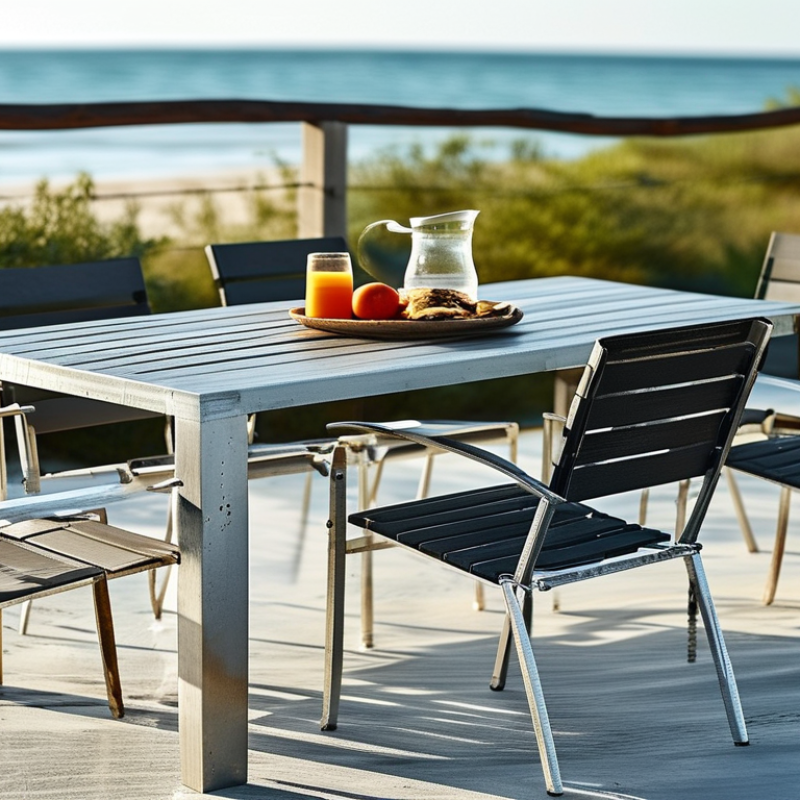
Coastal air carries chloride salts that settle on furniture, especially near beaches, docks, and open balconies. Aluminum forms a thin oxide layer when exposed to oxygen. This layer helps slow further corrosion without flaking like ordinary steel rust. It is not maintenance-free.
NACE International’s IMPACT study estimated global corrosion costs at about US$2.5 trillion annually, equal to 3.4% of global GDP.
That figure shows why material selection matters outdoors. ISO 9223 classifies marine atmospheres as highly corrosive environments, where salt deposits and constant humidity accelerate metal damage.
Aluminum generally performs well in these conditions, but chloride can still cause pitting if deposits remain on the surface.
In practical use, a monthly rinse with clean water can remove salt film from frames, joints, and hidden undersides. Drying matters too. Trapped moisture around fasteners may create localized corrosion or galvanic reactions with dissimilar metals.
Powder coatings can add protection, yet scratches should not be ignored. A coastal chair may look sound while corrosion develops beneath a damaged edge. That is where aluminum’s reputation needs careful reflection: the material resists coastal exposure, but design, finishing, drainage, and maintenance still decide its service life.
Why Choose Aluminum Furniture for Coastal Environments?
How Aluminum Furniture Performs Under Sun, Wind, and Changing Weather
Aluminum furniture handles strong coastal sunlight better than many painted materials. It does not swell, crack, or attract insects like untreated wood can. A quality powder-coated surface helps reduce fading and protects the metal from salt-laden air. Still, color changes may appear after years of intense exposure. No outdoor material is maintenance-free.
Wind creates a different challenge. Lightweight aluminum frames are easy to move, so stable feet and suitable anchoring matter near open beaches. I have found that broad bases perform better on patios exposed to sudden gusts. However, very strong storms can damage any furniture. Bringing cushions indoors is sensible, even when the frame remains outside. Changing weather also causes moisture to collect around joints, bolts, and drainage points. These small areas deserve attention.
Tips: Rinse aluminum furniture with fresh water after salty weather. Use mild soap and a soft cloth. Avoid abrasive pads, harsh cleaners, and trapped moisture. Check screws twice each year. Look beneath the frame, too. That step is easy to forget. If the finish develops a chip, repair it early and monitor nearby hardware for corrosion.
| Environmental Factor | How Aluminum Performs | Practical Benefit for Coastal Furniture | Recommended Care |
|---|---|---|---|
| Salt air and humidity | Aluminum naturally forms a thin oxide layer that helps protect the underlying metal. Marine exposure can still cause surface oxidation, especially where salt deposits remain or where dissimilar metals contact each other. | It does not rust in the same way as ordinary iron or unprotected steel, making it suitable for many seaside patios and balconies. | Rinse periodically with fresh water, use a mild detergent when needed, and dry or drain trapped water. Separate aluminum from incompatible metals where practical. |
| Direct sunlight and ultraviolet exposure | The metal itself is not degraded by ultraviolet radiation. The appearance and durability of the surface depend mainly on the quality and condition of the paint or powder-coat finish. | A properly finished frame can retain its appearance outdoors better than many untreated organic materials, although fading may occur over time. | Choose an outdoor-rated finish, avoid abrasive cleaners, and use shade or protective covers during long periods of intense exposure. |
| Wind and movement | Aluminum is relatively lightweight compared with steel, so furniture can be easier to move but may be more likely to shift or overturn in strong winds if it has a small footprint. | Lightweight construction is convenient for seasonal rearrangement, cleaning, and storage. | Use weighted bases, secure furniture in exposed locations, stack or store loose pieces before severe weather, and follow local wind-safety guidance. |
| Temperature changes | Aluminum expands and contracts as temperatures change. This movement is normally accommodated by suitable joints and fasteners, but poorly designed or over-tightened assemblies may develop stress or noise. | The material remains usable across normal outdoor temperature cycles when the frame and connections are properly designed. | Inspect joints and fasteners periodically, avoid unauthorized drilling or modification, and replace damaged hardware with compatible outdoor-grade parts. |
| Rain and changing weather | Aluminum is not affected by moisture in the same way as porous wood, but standing water, dirt, damaged finishes, and blocked drainage can accelerate staining or localized corrosion. | The frame can remain outdoors through variable weather with less risk of swelling or splitting than many wood products. | Keep drainage openings clear, dry cushions separately, clean dirt from joints, and touch up scratches with a compatible outdoor coating. |
| Maintenance requirements | Routine maintenance is generally limited to cleaning, checking hardware, and repairing finish damage before contaminants reach the metal. | Lower routine upkeep can be practical for homes, hotels, restaurants, and public outdoor areas near the coast. | Inspect at least seasonally, and inspect more often when furniture is close to surf, salt spray, or industrial pollutants. |
| Surface temperature and comfort | Aluminum conducts heat efficiently, so exposed surfaces can become hot in direct sun and cold in low temperatures. | The frame remains structurally useful, but seating comfort depends on cushions, breathable fabrics, and shade. | Use cushions or mesh seating, provide shade where possible, and avoid leaving bare metal surfaces in direct summer sun before use. |
| Sustainability and end of life | Aluminum can be recycled repeatedly when collected and processed through an appropriate recycling system. | Durable frames and recyclable material can support longer product use and responsible end-of-life management. | Repair reusable parts, separate cushions and mixed materials where possible, and check local recycling requirements. |
Note: Actual performance depends on alloy, frame design, fasteners, surface finish, installation, distance from the shoreline, and local weather conditions.
Why Choose Aluminum Furniture for Coastal Environments?
Coastal outdoor spaces change quickly. Morning sun, sudden showers, and salty wind can make heavy furniture inconvenient. Aluminum furniture offers a lighter alternative for patios, balconies, and beachside decks. One person can usually move a chair without dragging it across the floor. That protects tiles and reduces awkward lifting. Its light frame also makes seasonal storage easier, especially in compact homes. I have found that rearranging chairs before a windy afternoon takes minutes, not muscle.
Lightweight design supports flexible outdoor arrangement. You can shift a dining table toward shade, create space for guests, or move seating away from blowing spray. Aluminum does not usually rust like untreated steel, but coastal air still deserves attention. Salt deposits may dull the finish or encourage surface corrosion around joints and scratches. A stable, well-made frame matters more than an attractive appearance alone. Some lightweight pieces can feel unstable in strong winds. That is a detail people often overlook.
Tips: Rinse aluminum furniture with fresh water after heavy salt exposure. Dry joints and drainage points with a soft cloth. Store cushions separately in a dry, ventilated place. Use protective covers only when the furniture is completely dry. Check screws and feet every few months. I once ignored a loose connector, and the chair rocked noticeably. Small maintenance tasks are easy to postpone. They should not be.
Why Choose Aluminum Furniture for Coastal Environments?
Low-Maintenance Features That Suit Beachside Living
Aluminum furniture suits coastal homes because it handles humidity, salt air, and frequent outdoor use. Its lightweight frame is easy to move when strong winds approach. Powder-coated finishes also create a protective surface against everyday moisture. However, coating quality matters. A deep scratch can expose the metal underneath.
Maintenance is refreshingly simple. Rinse the furniture with clean water after sandy or salty weather. Use mild soap and a soft cloth for sunscreen marks, food spills, or bird droppings. Avoid abrasive pads, which may dull the finish. Drying the frame helps prevent water spots around screws and joints. Check those areas every few months. Small problems are easier to manage early.
It is tempting to assume aluminum needs no care. That assumption is incomplete. Coastal dust can collect beneath seat edges and inside drainage gaps. I would inspect these hidden spaces after storms, even when the surface still looks clean. Protective covers can help during long periods of nonuse, but trapped moisture may cause problems. Leave ventilation space whenever possible. Solid aluminum does not rot like wood, yet cushions and hardware still need attention. A loose fastener, faded fabric, or blocked drain can make a low-maintenance setup feel neglected.
Aluminum is well suited to beachside living because it does not rust like untreated iron or steel, is lightweight, and generally requires only routine cleaning. The comparison below shows a practical coastal-care index, where a lower score indicates fewer ongoing maintenance demands.
The index reflects common care requirements such as cleaning, repainting, sealing, and protection from salt air. Actual maintenance depends on finish quality, climate exposure, and usage.
Coastal air carries salt, moisture, and wind-blown grit. These elements attack exposed metal and weak connections.
NACE’s IMPACT Study estimated global corrosion costs at about $2.5 trillion annually, equal to 3.4% of global GDP.
Aluminum remains practical because it forms a thin, self-renewing oxide layer. However, bare aluminum can stain, pit, or lose visual consistency near surf. It is not maintenance-free.
Choose finishes according to exposure. A durable powder coating creates a sealed, colored surface, while anodizing preserves a more metallic appearance. Specify finish systems tested under relevant architectural standards, such as AAMA 2604 or AAMA 2605. ASTM B117 salt-spray results can help compare coatings, but they do not perfectly predict outdoor service life. That limitation matters. I would inspect cut edges, weld zones, and drainage points before approving any sample.
Frames should use clean, well-drained profiles with minimal water traps. Separate aluminum from dissimilar metals with compatible washers or isolators, reducing galvanic corrosion around fasteners. In design terms, slatted seats dry faster than deep cushions. Raised legs prevent standing water after rain. Light finishes can reduce surface heat, though they show salt deposits more clearly. Dark finishes hide residue better, but they may feel hotter under direct sun. Rinse furniture with fresh water regularly, then check joints, coating chips, and hardware. Small defects become expensive later.
: Aluminum resists swelling, cracking, and insect damage better than untreated wood. It also forms a protective oxide layer. Still, it is not maintenance-free.
Quality powder coating can reduce fading and protect the surface. After years of intense sunlight, color changes may still appear. Dark finishes can feel hotter.
Salt, moisture, and grit can attack coatings, joints, and fasteners. Bare aluminum may stain or develop small pits. Regular rinsing helps.
Rinse the furniture with fresh water. Use mild soap and a soft cloth. Dry joints and drainage areas carefully.
Lightweight frames can move during sudden gusts. Choose broad bases, stable feet, or suitable anchoring. Very strong storms can damage any furniture.
No. Bring cushions indoors before severe weather. Moisture can collect inside thick cushions and around frame joints. The frame may survive, but the fabric might not.
Choose clean profiles with good drainage and few water traps. Raised legs help prevent standing water after rain. Slatted seats usually dry faster.
Use compatible washers or isolators between different metals. Inspect screws twice each year. Look underneath the frame, too.
Repair the chip early. Then monitor nearby hardware for corrosion. Small defects can become expensive later.
No. Testing helps compare finishes, but outdoor results vary. Inspect cut edges, weld zones, and drainage points before approval. I would not trust a sample alone.
Why choose aluminum furniture for coastal environments? Aluminum is a practical choice for seaside spaces because it naturally resists salt air, moisture, and many forms of coastal corrosion. With suitable protective finishes, it can also handle strong sunlight, sea breezes, rain, and changing temperatures while maintaining its appearance and structural performance. Its lightweight construction makes it easy to move when rearranging a patio, preparing for storms, or storing furniture during the off-season.
Aluminum furniture also supports a relaxed, low-maintenance beachside lifestyle. It does not require frequent sealing or complicated care, and routine cleaning with mild soap and water is often enough to remove dust and salt residue. When selecting pieces, consider powder-coated or other durable finishes, sturdy frames, and designs that provide both comfort and airflow. Neutral colors, clean lines, and weather-resistant cushions can help create a coastal setting that is attractive, functional, and easy to maintain.

Forza Furniture