Small homes rarely lack furniture; they lack room for it when it is not in use. A dining table can block a walkway, while spare chairs crowd a closet. Folding designs promise relief, but they save space in different ways. Some collapse into a slim stack. Others mount to a wall and leave the floor clear. The best choice depends on your room, storage habits, and how often you need the furniture. A clever mechanism is useful. So is a piece you can fold without a struggle.
This guide explores which folding furniture saves the most storage space, from flat-folding chairs and drop-leaf tables to wall-mounted desks and Murphy beds. We compare folded dimensions, clearance needs, weight, and everyday practicality—not just product claims. For example, a chair that folds nearly flat may fit behind a door, while a wall desk can free floor space but still need an unobstructed wall. Small details matter. Measure the folded item and its storage route before buying. A narrow closet opening can defeat an otherwise compact design. That sounds obvious, but it is easy to overlook when shopping. We’ll also consider comfort, durability, and setup effort, because the smallest footprint is not automatically the best fit. The most space-saving option is the one that works in your home, fits your routine, and does not become a hassle to store.
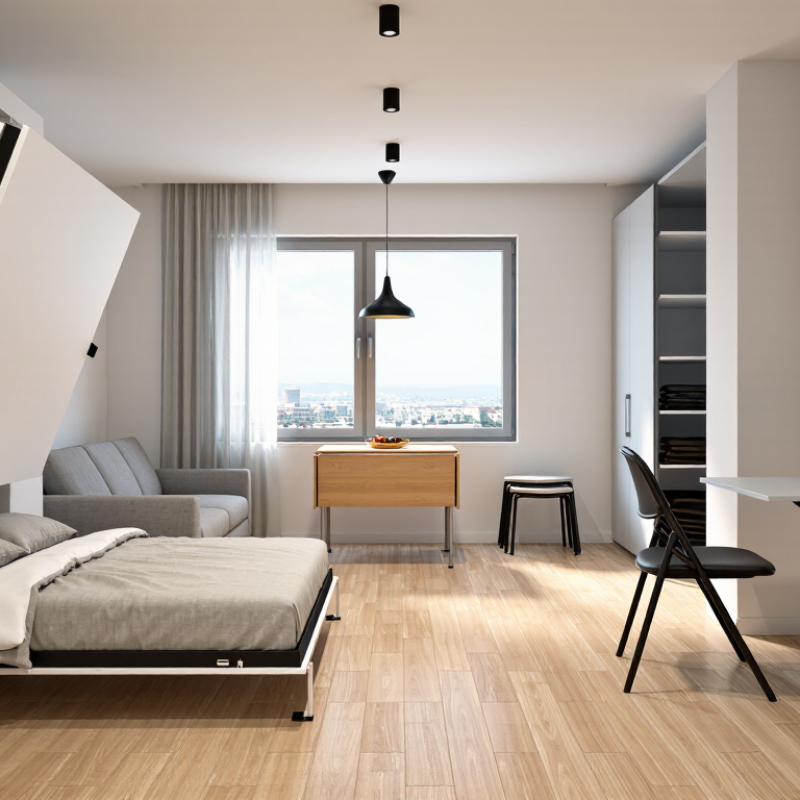
“Space-saving” is not a single measurement. Compare each item’s folded footprint: its width, depth, and height when fully closed. Measure protruding legs, hinges, or handles too; they can stop furniture sliding neatly beside a wall. That matters.
Storage volume adds another test. A slim folding chair may fit under a bed, while a shorter, bulky stool may not. Check whether pieces stack, nest, or need to stay separate. Published dimensions can miss awkward shapes, so measure the actual shelf, closet, or vehicle space before buying. It is a small, unglamorous step, and easy to skip.
Setup clearance is the space needed to unfold and use the furniture safely. A table might have a tiny folded footprint but need room for its legs to swing outward. Leave space for hands, nearby doors, and people pulling chairs back. Mark the open dimensions on the floor with tape; a narrow kitchen aisle makes the difference obvious. These three measures can disagree, which is why a “smallest” option may still feel crowded in daily use.
When comparing space-saving furniture in 2026, start with a fixed footprint, not a marketing claim. A 72 × 30-inch banquet table measures 6 feet by 2.5 feet, covering 15 square feet while open. That is substantial. In a small meeting room, it can occupy most of a narrow aisle or leave little room for extra seating.
Use that area as a commercial baseline. A folding table may shrink considerably for storage, but the result depends on its folded thickness, leg design, and storage position. Check the packed dimensions, not just the tabletop size. Measure the closet doorway, too; a compact panel is no help if it cannot pass through. There is a catch: chairs also take space, even when folded.
For a fair comparison, record both the open footprint and the space each item takes when stored. Folding chairs can stand in a tight row, while some tables need a wider, clear wall area. Keep room for safe access and avoid stacking beyond the product’s instructions. I would not assume the thinnest item is always the most practical. A slightly bulkier table that rolls easily may be simpler to move between rooms, though that depends on the floor and the available storage.
When comparing folding chairs, folded thickness is the easiest measurement to check, but it does not tell the whole storage story. Measure each chair at its widest folded point, including hinges and feet. A slim frame may still catch on a closet door or lean awkwardly against a wall. Allow clearance.
Stacking changes the comparison. Place six chairs together on a level floor, then measure the height and depth of the stack. Chairs with nesting legs or aligned frames often stack more tightly than chairs with bulky crossbars. Check whether the top chair sits steadily; a tall, narrow stack can wobble when someone pulls a chair from the middle. Test it gently. Storage density matters most when chairs are stored as a group, not just when one chair looks compact.
For a fair comparison, record folded thickness, stack height, and the floor space used by the full set. Divide the total chair count by that footprint if you want a simple density figure. I would also check the folded chairs beside the actual storage space, because product measurements can miss handles, uneven floors, or a baseboard. This is less scientific than it sounds. Still, those small details often decide whether chairs slide neatly into a cupboard or end up blocking the hallway.
A 60 × 80-inch U.S. queen mattress gives you a useful baseline when comparing wall beds. It does not tell you the full space the furniture needs. Frames, side panels, and installation clearances can add several inches, depending on the design. So measure the bed’s listed outside dimensions, not just its mattress size. That difference matters.
Mark the closed footprint on the floor with painter’s tape, then mark the open bed’s reach. Check nearby doors, walkways, baseboards, outlets, and any radiator or window sill. Measure from the wall to the bed’s farthest edge when open; a clear path can disappear quickly in a small room. Also check ceiling height and the wall area needed for mounting. Specifications vary, so confirm them against the exact model’s installation guide before buying. I’d remeasure after moving nearby furniture, too. Rooms rarely behave like floor plans.
| Furniture type | Representative stored footprint (W × D) | Representative in-use footprint (W × D) | Floor area stored | Floor area in use | Floor area reclaimed when stored | Sleep surface or use note |
|---|---|---|---|---|---|---|
| Queen wall bed | 65 × 18 in | 65 × 86 in | 8.1 sq ft | 38.8 sq ft | 30.7 sq ft | Designed around a 60 × 80 in queen mattress; the in-use footprint includes clearance for the bed frame. |
| Queen sofa bed | 84 × 38 in | 84 × 90 in | 22.2 sq ft | 52.5 sq ft | 30.3 sq ft | Representative sofa-bed dimensions; the open sleeping surface and exact frame size vary by design. |
| Folding guest bed (single) | 40 × 14 in | 40 × 80 in | 3.9 sq ft | 22.2 sq ft | 18.3 sq ft | Typically suited to a single sleeper; it does not provide a queen-size sleep surface. |
| Folding dining table | 36 × 12 in | 36 × 48 in | 3.0 sq ft | 12.0 sq ft | 9.0 sq ft | Representative compact table; chair space and circulation clearance are not included. |
| Folding work table | 48 × 3 in | 48 × 24 in | 1.0 sq ft | 8.0 sq ft | 7.0 sq ft | Stored footprint assumes the folded table is placed flat against a wall; leg designs affect dimensions. |
| How to read the figures: Footprints are representative examples, not universal product specifications. Areas are calculated from the stated width × depth and rounded to one decimal place; they exclude required access, walkways, and operating clearance. The U.S. queen mattress standard is 60 × 80 inches (33.3 sq ft), while a wall bed’s deployed footprint is larger because of its frame. | ||||||
For a small room, folding chairs reclaim the most floor space per item: several can stack against one wall, then return quickly when guests arrive. Folding tables rank higher for total area reclaimed, but lower for access; a large table is awkward to unfold daily. Wall-mounted drop-leaf tables save floor area too, yet permanently occupy wall space. These rankings assume typical home use, not measured product tests. Measure the folded footprint and open clearance before buying. A chair that blocks a closet is not space-saving in practice.
For daily use, rank options by access and frequency: folding stools and chairs are easiest to retrieve, while wall-mounted tables work best when used often. Load capacity must come from the maker’s tested rating; never infer it from appearance. ANSI/BIFMA X5.1-2017 includes a 100,000-cycle seat durability test for general-purpose office chairs. That is a useful durability benchmark, not proof that a folding chair meets the standard. My ranking is imperfect: room shape changes everything. A narrow kitchen may benefit more from a wall-mounted table than another stack of chairs. Test the hinge, lock, and folded balance in person. One awkward latch can make daily use feel like a chore.
Comparative ratings for space reclaimed, ease of access, relative load capacity, and likely use frequency. Scores are illustrative 1–5 assessments, not standardized test results or certified load ratings.
How to read it: Higher scores indicate stronger performance. Wall-mounted drop-leaf desks and Murphy beds reclaim the most floor space when stowed; folding chairs score well for quick access and frequent use.
The U.S. queen baseline is 60 × 80 inches. The frame may extend beyond it.
Side panels and frame parts can add several inches. Check the listed outside dimensions, not only the mattress size.
Mark its reach with painter’s tape. Measure from the wall to its farthest edge, then check doors and walkways.
Check ceiling height, mounting wall space, outlets, baseboards, radiators, and window sills. Remeasure after moving nearby furniture.
Folding chairs stack against a wall and free floor space quickly. A chair blocking a closet does not help much.
They can reclaim substantial floor area, but larger tables may be awkward to open daily. Measure their open clearance first.
Use the maker’s tested load rating. Test the hinge, lock, and folded balance in person.
No. A 100,000-cycle seat test is a benchmark for general-purpose office chairs, not proof that a folding chair meets it.
Folding chairs and stools are easy to retrieve. A wall-mounted table may suit a narrow kitchen better. My ranking can miss the room’s quirks.
Choosing space-saving folding furniture depends on more than how small an item looks when closed. Compare its folded footprint, the volume needed for storage, and the clearance required to open and use it. A standard 72 × 30-inch banquet table occupies 15 square feet when set up, making its folded dimensions and storage position important factors. Folding chairs can save space when their folded thickness is low or when they stack efficiently, while wall beds should be assessed against the 60 × 80-inch footprint of a U.S. queen mattress.
To decide which folding furniture saves the most storage space, consider how much floor area it reclaims alongside access, load capacity, and how often it will be used. A compact item may be less practical if it is difficult to retrieve or set up. The best choice is the one that fits the available storage and supports everyday needs.

Forza Furniture