Top Reasons to Buy Stackable Folding Furniture

Time:2026-09-21 Author:Henry
0%

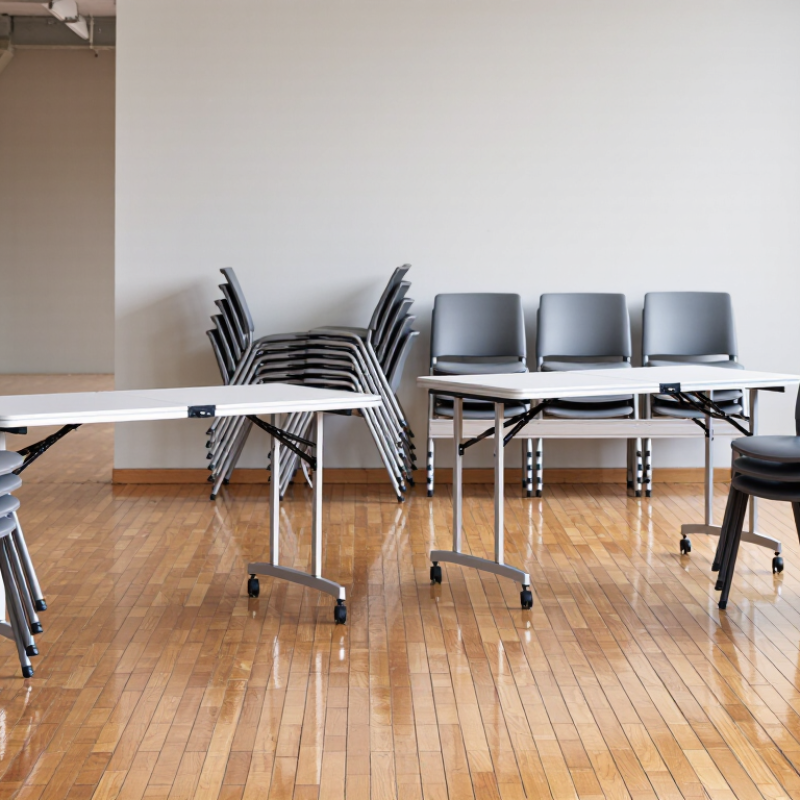
Why should you buy stackable folding furniture? The answer begins with space, not fashion. In a small apartment, a folding chair can disappear beside a wardrobe after dinner. In a training room, twenty tables can stack against one wall within minutes. That flexibility helps homes, offices, classrooms, cafés, and event venues respond to changing needs.

Don Norman, a cognitive scientist and respected design authority, wrote, “Design is really an act of communication, which means having a deep understanding of the person with whom the designer is communicating.” His principle explains the value of this furniture. Good stackable designs communicate clearly through easy movement, stable frames, safe hinges, and intuitive storage. They reduce clutter without demanding permanent commitment.

Look for reinforced joints, smooth folding mechanisms, protective floor glides, and weight ratings suited to daily use. A lightweight chair may be convenient, but an unstable one quickly becomes expensive. A compact table may save room, yet poor hardware can weaken after repeated folding. Small details matter.

Still, stackable folding furniture is not perfect. Some models sacrifice cushioning, visual warmth, or long-term comfort for portability. That trade-off deserves honest consideration. Buyers should measure storage height, check folded dimensions, and test the locking system before purchasing. Reliable products make movement simple, protect surfaces, and support repeated use. The best choice is not merely furniture that folds. It is furniture that adapts without creating new problems.
Top Reasons to Buy Stackable Folding Furniture

What Stackable Folding Furniture Is and How It Works

Stackable folding furniture combines two functions in one structure: it folds flat and stacks vertically.

When opened, hinged legs, backrests, or panels lock into a usable position. When closed, each piece becomes thinner and easier to store. The stack then uses floor space efficiently, often inside a closet, utility room, or under a worktable.

Its operation depends on strong hinges, stable joints, and a reliable locking mechanism. Before using a chair or table, check that every latch is fully engaged. Uneven floors can affect stability. Weight limits also matter, even when the frame feels solid.

In a compact apartment, several folded chairs can stand in one narrow corner, while a folding table can open quickly for meals or project work. That practical change is noticeable.

It is not flawless.

Repeated folding may loosen hardware over time. Dust can also affect moving parts. Inspect screws and joints regularly, and avoid forcing a stiff hinge.

From a professional use perspective, good furniture should balance light handling with structural strength. Some lightweight designs are convenient but may feel less steady during daily use. That trade-off deserves attention. The best choice depends on storage frequency, available space, surface quality, and the load the furniture must support.

Space-Saving Benefits for Compact Homes and Workplaces

Top Reasons to Buy Stackable Folding Furniture

Space-Saving Benefits for Compact Homes and Workplaces

Small rooms demand furniture that works harder. Stackable folding chairs and tables can clear valuable floor space within minutes. A dining area can become an open exercise zone after breakfast. In a shared office, folded tables can create room for workshops or quiet work. The change feels practical, not decorative.

In my experience, measuring the storage corner matters more than choosing the largest set. A 60-centimeter-wide shelf may hold several folded chairs, while a narrow cabinet can hide them neatly. Check folded dimensions, weight limits, locking parts, and floor protection. Reliable hinges should move smoothly without scraping or sudden drops. These details reduce daily frustration and support safer use.

Stackable furniture also helps compact workplaces respond to changing schedules. A meeting room may need six seats at noon and twenty by afternoon. Staff can rearrange the space without carrying heavy fixed furniture across the room. Still, these products are not magic. Poor stacking can cause scratches, unstable piles, or blocked walkways. I once underestimated chair height and lost access to a storage drawer. That small mistake showed why clearance should be measured with the furniture fully folded. Slim designs may also trade comfort for space, so seat depth and back support deserve a real test before purchase.

Flexible Uses Across Living, Dining, and Outdoor Areas

Stackable folding furniture earns its place when one room must serve several purposes. In a living area, two folding chairs can sit beside a reading lamp during the week. They can move near the sofa when friends arrive. Fold them flat afterward. A narrow folding table can become a laptop desk, craft surface, or temporary serving station. I have found that clear walking space matters more than owning many pieces. Measure doorways and storage gaps before buying. Check the folded depth, seat height, frame joints, and weight rating. Small details prevent awkward daily handling. Still, space saving is not automatic. A heavy chair may stack neatly but remain difficult to lift. That trade-off deserves honest attention.

In dining areas, stackable seating adjusts quickly for family meals, study sessions, or weekend guests. Keep frequently used pieces at waist height, not buried behind boxes. Outdoor use requires stricter judgment. Look for corrosion-resistant hardware, stable feet, and surfaces that dry quickly after rain. Store cushions indoors. Even weather-tolerant furniture needs protection from standing water and harsh sunlight. On a balcony, one folding table can hold breakfast, plants, or a small dinner for two. On a patio, several pieces can create a flexible arrangement without permanent construction. I would not treat every model as equally suitable outdoors. Hinges can pinch fingers, finishes can fade, and uneven ground can reduce stability. Test each piece on the actual surface, then inspect it after repeated opening and folding. Good furniture adapts to real routines, including the messy ones.

Top Reasons to Buy Stackable Folding Furniture - Flexible Uses Across Living, Dining, and Outdoor Areas
Furniture Type Suitable Areas Typical Open Size Typical Folded or Stacked Storage Profile Typical Capacity Key Reason to Buy Practical Use
Folding Dining Chair Dining room, kitchen, home office, balcony, patio Width: 16–19 in
Depth: 18–23 in
Height: 30–36 in
Folded thickness commonly measures about 4–8 in per chair; several units can be stored together Usually seats 1 adult; many household models are rated around 250–300 lb Creates extra seating without permanently occupying floor space Useful for dinner parties, study areas, seasonal gatherings, and temporary workstations
Stacking Side Chair Living room, dining area, waiting area, covered outdoor spaces Width: 17–21 in
Depth: 19–23 in
Height: 30–35 in
Stacked height is commonly about 8–12 in for four chairs, depending on the frame design Seats 1 adult per chair Fast setup and compact vertical storage make it suitable for changing layouts Can be arranged around a dining table, used as occasional living-room seating, or stored after events
Folding Dining Table Dining room, kitchen, craft area, home office, covered patio Common rectangular size: 48–72 in long × 24–36 in wide × 28–30 in high Folded depth is often about 3–6 in, allowing storage against a wall or inside a utility closet Typically seats 4–6 people, depending on table length and seating arrangement Transforms one room for meals, projects, games, or remote work Suitable when a full-time dining table would limit circulation or usable floor area
Folding Card or Utility Table Living room, garage, laundry area, craft room, indoor and outdoor events Common size: 48–72 in long × 24–30 in wide × 28–30 in high Many models fold in half with a storage thickness of approximately 4–7 in Often supports 4–6 seated users for meals or activities Provides a large temporary work surface with relatively simple storage Can serve as a buffet station, sewing table, homework desk, or event surface
Folding Coffee Table Living room, den, balcony, patio, guest room Common size: 30–48 in long × 18–24 in wide × 15–18 in high Often folds to a slim profile of roughly 3–6 in Designed for light household items rather than concentrated heavy loads Provides a flexible central surface without making a small room feel crowded Useful for snacks, board games, laptops, or temporary guest seating support
Folding Bench Entryway, dining area, mudroom, porch, garden, patio Length: 36–72 in
Depth: 12–16 in
Seat height: 17–19 in
Folded thickness is commonly about 4–8 in Usually seats 2–3 adults, depending on length and load rating Offers more seating per stored unit than individual chairs Works as dining seating, an entryway seat, a plant stand, or event seating
Folding Lounge Chair Living room, reading corner, balcony, deck, covered patio Width: 24–30 in
Depth: 28–36 in
Height: 30–42 in
Folded depth commonly falls within 6–10 in, depending on the backrest and armrests Seats 1 adult Adds occasional relaxation seating that can be moved between indoor and outdoor areas Practical for guests, reading, sunrooms, and spaces that require frequent rearrangement
Folding Outdoor Bistro Set Balcony, terrace, small patio, courtyard, garden Table diameter commonly 24–30 in; chairs are generally 16–20 in wide Table and chairs can usually fold nearly flat for seasonal storage Typically accommodates 2 people Maximizes limited outdoor space while allowing the area to be cleared quickly Suitable for morning coffee, small meals, reading, and compact apartment balconies
Folding Outdoor Dining Table Patio, deck, garden, poolside area, outdoor entertaining space Common size: 48–72 in long × 30–36 in wide × 28–30 in high Folded depth is commonly about 4–8 in, although thicker frames may require more space Typically seats 4–6 people Supports seasonal entertaining without requiring a permanent outdoor dining zone Useful for barbecues, family meals, celebrations, and additional serving space
Folding Serving Cart Kitchen, dining room, living room, patio, garden Width: 18–24 in
Depth: 24–36 in
Height: 28–36 in
Many designs fold to approximately 5–10 in deep Capacity varies; commonly intended for dishes, beverages, and light household supplies Adds mobile storage and serving space without requiring a permanent cabinet Useful for outdoor meals, indoor entertaining, plant care, and kitchen overflow

Typical dimensions and capacities are general ranges for household furniture; actual specifications vary by frame design, materials, safety standards, and manufacturer.

Practical Advantages of Easy Storage and Quick Setup

Stackable folding furniture earns its place in small homes, shared offices, and temporary event spaces. In my experience, the biggest advantage is not appearance. It is the few minutes saved after use. A folding chair can close flat, while a folding table may fit behind a door or beneath a bed. Stacking several pieces keeps narrow storage areas usable. Quick setup also helps when guests arrive unexpectedly. Open the frame, check the locking points, and place the furniture on a level surface. That simple routine reduces wobbling and accidental movement.

Tips: Measure your storage space before buying. Check folded height, width, and weight. Choose pieces with clear locking mechanisms and smooth hinges. Keep the floor dry. Never exceed the stated load limit.

The best designs support a predictable setup. A table should open without forcing the joints, and each leg should touch the floor evenly. Rounded edges can reduce minor bumps in busy rooms. I still sometimes rush the folding process, which makes storage less tidy and may strain the hinges. That is a useful reminder: convenience depends on careful handling. Dust can also collect around locks, so occasional cleaning keeps movement smoother. For frequent use, inspect screws, feet, and joints every few weeks. A small defect can become annoying before it becomes dangerous.

Top Reasons to Buy Stackable Folding Furniture

Compared with fully assembled furniture, stackable folding designs typically reduce storage footprint, shorten setup time, and make seasonal or occasional furniture easier to handle. The figures shown are practical, brand-neutral planning benchmarks for common household use.

Key Factors to Consider Before Buying Stackable Folding Furniture

Stackable folding furniture saves space, but compact storage is only the beginning. Before buying, check the frame material, hinge quality, weight rating, and locking system. A chair that folds smoothly in a showroom may wobble after repeated use. I have found that uneven floors expose weak joints quickly.

Industry reports support this growing interest. Grand View Research valued the global furniture market at about $516.7 billion in 2023. Its report also forecasts steady growth through 2030, driven partly by flexible living spaces. Research and Markets’ Folding Furniture Global Market Report 2024 highlights rising demand from homes, offices, events, and hospitality settings. These figures show market momentum, not guaranteed product quality. That distinction matters.

Tips: Measure both the folded and opened dimensions. Leave clearance for fingers and hinges. Compare the product’s tested load with your real needs. Look for replaceable feet and corrosion-resistant hardware, especially for humid rooms. Ask about cleaning instructions and storage limits. Avoid choosing the lightest option automatically; low weight can reduce stability. Sustainability claims also deserve scrutiny. A durable steel frame may outlast cheaper materials, but manufacturing impacts still exist. I would inspect one sample personally before ordering many units. Photos rarely reveal sharp edges, stiff hinges, or awkward stacking.

FAQS

Why is stackable folding furniture useful in small spaces?

It folds flat and uses vertical storage. A chair may fit behind a door or beneath a bed.

What should I measure before buying?

Measure the opened and folded dimensions. Check height, width, weight, and nearby clearance.

How can I set up folding furniture safely?

Open the frame fully. Check every locking point. Place it on a level, dry floor.

What features improve stability?

Choose even legs, strong hinges, and clear locks. Rounded edges can reduce small bumps.

Should I choose the lightest furniture available?

Not automatically. Very low weight may reduce stability. Compare the tested load with your actual needs.

How should I maintain folding furniture?

Clean dust around the locks. Inspect screws, feet, and joints every few weeks. Small defects matter.

Can uneven floors affect folding furniture?

Yes. Uneven floors can expose weak joints and create wobbling. Each leg should touch the floor evenly.

Are market growth figures proof of good quality?

No. Market figures show demand, not guaranteed performance. Inspect a sample before ordering many units.

What mistake can happen during storage?

Rushing the folding process can strain hinges and create messy stacks. I still make that mistake sometimes.

What should I check for frequent use?

Look for replaceable feet, durable hardware, and a suitable load rating. Photos may hide sharp edges or stiff hinges.

Conclusion

Stackable folding furniture combines the convenience of foldable designs with the efficiency of stackable storage. When not in use, chairs, tables, and other pieces can be folded and neatly stacked to save valuable floor space. This makes them especially useful in compact homes, shared offices, classrooms, apartments, and other areas where flexibility matters. The lightweight structure also allows furniture to be moved, rearranged, or stored without much effort.

Why should you buy stackable folding furniture? It offers practical versatility for living rooms, dining areas, workspaces, balconies, gardens, and event settings. You can quickly create extra seating or table space when guests arrive, then fold everything away after use. Before buying, consider the furniture’s weight capacity, materials, stability, comfort, folding mechanism, stack height, and storage requirements. Choosing durable, easy-to-handle pieces ensures that your furniture remains useful, organized, and adaptable for everyday needs.

Henry

Henry

Henry is a dedicated marketing professional with a profound expertise in the company's offerings. With years of experience in the industry, he possesses an impressive understanding of the market dynamics and consumer behaviors that drive success. Henry is committed to sharing his insights through......