How to Paint Plastic and Metal Folding Chairs?

Time:2026-10-16 Author:Sienna
0%

Can you paint plastic and metal folding chairs? Yes, but the answer depends on the chair’s material, surface condition, and daily use. Plastic often resists ordinary paint because its surface is smooth and slightly flexible. Metal accepts paint more readily, although rust, oil, and peeling finishes can cause early failure. Understanding these differences makes the project more predictable.

A reliable result begins with careful preparation. Clean each chair with warm water and a mild degreaser. Scrub around hinges, feet, and textured grooves where dust collects. Lightly sand glossy plastic and worn metal to improve adhesion. Remove rust with a wire brush, then apply a suitable metal primer. For plastic, choose a bonding primer designed for the specific material. Test the product on a hidden area first. It may reveal an unexpected reaction.

Use spray paint or brush-on paint made for outdoor furniture, depending on the chair’s design. Apply several thin coats instead of one heavy coat. Thick paint can pool beside screws and crack near folding joints. Keep moving parts free from buildup. Let every coat dry under the manufacturer’s recommended conditions. A dry surface is not always fully cured. That mistake is easy to make.

This guide explains how to prepare, prime, paint, and protect both chair types. It also addresses ventilation, drying time, color selection, and practical durability. Results may vary. Even careful work can need touch-ups after repeated folding and outdoor exposure. With patience and realistic expectations, old folding chairs can gain a cleaner, more useful finish.
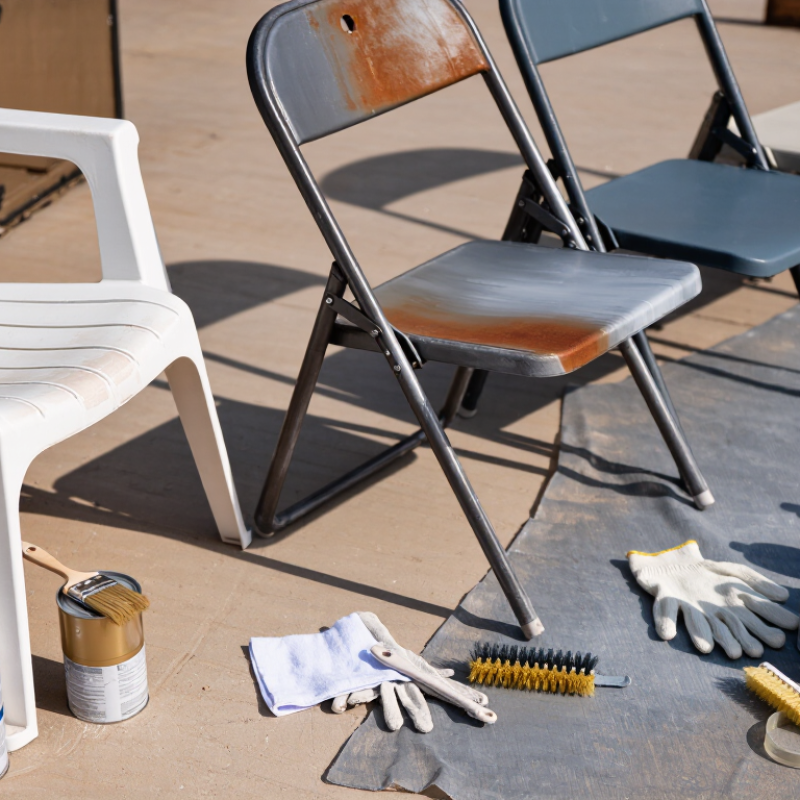
How to Paint Plastic and Metal Folding Chairs?

Assess Plastic and Metal Substrates Using ASTM D3359 Adhesion Criteria

How to Paint Plastic and Metal Folding Chairs?

Before painting, inspect the chair under strong side lighting. Plastic may flex, while metal may hide rust around hinges and welds. These differences affect adhesion and require separate surface preparation.

ASTM D3359 provides a practical adhesion check for cured coatings. Method A uses an X-cut, while Method B uses a cross-cut lattice. Method B is often useful for thin chair coatings, but plastic may require method validation because the standard mainly addresses metallic substrates. Clean a hidden area, apply the coating system, and allow it to cure under controlled conditions. Use a sharp, suitable blade and consistent pressure. Then apply pressure-sensitive tape over the cuts and remove it at the specified angle and speed. Rate the detached area from 5B, with no peeling, to 0B, with severe removal. Record film thickness, curing time, temperature, and substrate type.

I lightly abrade glossy plastic and remove dust before coating. Metal needs degreasing and rust removal, especially near moving joints. I avoid coating hinge gaps because paint can bind the chair. Small test panels help reveal incompatibility before production. One mistake is testing too early; a soft film can produce a misleading failure. Another is assuming a good metal result predicts plastic performance. It does not. For reliable work, repeat the test after full cure and compare several chair locations. Some surfaces still fail unexpectedly. That is useful evidence, not a defect in the record.

How to Paint Plastic and Metal Folding Chairs?

ASTM D3359 Adhesion Classification Thresholds

ASTM D3359 evaluates coating adhesion by observing the percentage of coating removed after a cross-cut or tape test. Higher ratings indicate stronger adhesion: 5B represents no coating removal, while lower ratings allow progressively greater coating loss. Test painted plastic and metal chair surfaces separately because substrate preparation, cleaning, sanding, and primer selection can affect the final adhesion result.

Clean, Degrease, Sand, and Mask Hinges with 400–600 Grit Abrasives

Painting folding chairs starts with preparation, not color selection. Plastic and metal hold skin oil, dust, and cleaning residue differently. I wash each chair with warm water and a mild detergent, using a stiff nylon brush around joints and seat edges. After rinsing, I let the surfaces dry completely.

Degreasing is essential before sanding. A clean lint-free cloth helps reveal greasy patches that water misses. I wipe small areas, change cloth sections often, and avoid soaking the folding hinges. Then I lightly sand plastic and metal with 400–600 grit abrasive paper. The goal is a dull, even surface, not deep scratches. I use 400 grit on stubborn metal areas and 600 grit for smoother plastic surfaces. Keep your pressure gentle.

Mask the hinges carefully with narrow tape before painting. Leave the moving parts clean, because dried paint can restrict the folding action. I also cover hinge gaps with folded paper when tape cannot reach them. That small step saves a frustrating repair later.

My first attempt was too aggressive. I sanded a plastic edge until its texture changed, and the finished coat showed the mistake. Now I test a hidden spot before treating the whole chair. After sanding, I remove every trace of dust with a clean cloth and inspect the frame under bright light. Any shiny patch may need another light pass. Work in fresh air, and allow each cleaned surface to dry before applying paint.

Apply Plastic Adhesion Promoter or Metal Primer per TDS Specifications

How to Paint Plastic and Metal Folding Chairs?

A durable finish begins with the correct adhesion system, not the color. The NACE IMPACT study estimated global corrosion costs at 3.4% of worldwide GDP. That figure explains why metal preparation deserves patience. Remove oil, dust, and loose rust with a suitable cleaner. Scuff glossy steel with fine abrasive paper. Wipe away residue, then let the surface dry completely. Apply a metal primer exactly as its Technical Data Sheet requires. Respect its mixing ratio, film thickness, drying window, and recoat time. A rushed second coat can trap solvent beneath the surface.

Plastic needs different treatment. Identify the plastic when possible, because polyethylene and polypropylene often resist ordinary coatings. Clean the chair with a compatible degreaser, then test a hidden area. Apply a plastic adhesion promoter in a thin, even layer. The product TDS should control flash time and topcoat compatibility. Do not guess.

Watch the edges.

For folding chairs, spray or brush into hinge zones without flooding them. Heavy buildup may restrict movement after curing. Industry coating guidance commonly links surface cleanliness, dry-film thickness, and cure conditions with coating performance. My practical mistake was sanding every plastic chair aggressively. It created visible scratches without improving adhesion. A small test panel would have prevented that. Temperature, humidity, and ventilation also matter; record them during application. If the primer remains soft beyond its stated cure time, stop coating and investigate contamination, thickness, or unsuitable material.

Spray Thin Coats from 10–15 cm Away with 50–75% Overlap

How to Paint Plastic and Metal Folding Chairs

Clean each chair with warm water and a mild degreaser. Dirt and skin oils can ruin adhesion. Let the surface dry completely. Sand glossy plastic lightly with fine-grit paper, then remove the dust with a clean cloth. On metal chairs, remove loose rust and inspect every joint for movement. Use a surface-appropriate primer, following its drying instructions. A small test area can reveal poor adhesion before the whole chair is painted.

Tips: Hold the spray can 10–15 cm away. Keep your wrist moving steadily. Apply thin coats, not one heavy layer. Overlap each pass by 50–75% for even coverage. Start spraying just before the chair and release the nozzle after passing its edge. This reduces blobs on the legs and corners. Wear suitable eye protection and work in a well-ventilated area.

Allow the first coat to become touch-dry before adding another. Plastic often needs patience because thick paint stays soft underneath. Metal may look covered quickly, but exposed edges still need attention. Turn the chair carefully to reach the underside and folding hinges. Avoid spraying directly into moving joints, or the paint may bind them. I sometimes rush the final coat, and that is where drips appear. A slight missed spot is easier to correct than a sagging finish. Test the folding action only after the paint has cured according to the coating instructions.

Allow Recoat and Full Cure Times, Typically 24–48 Hours Before Use

How to Paint Plastic and Metal Folding Chairs?

Allow Recoat and Full Cure Times, Typically 24–48 Hours Before Use

Painting folding chairs is less about spraying quickly and more about respecting the drying schedule. Clean plastic with warm water and mild detergent, then remove grease from metal surfaces. Lightly scuff both materials until the finish feels evenly dull. Sand carefully around hinges and curved legs, where missed glossy patches can cause peeling.

Apply a suitable primer for the chair’s material, using thin, controlled coats. Heavy layers may look smooth but often remain soft underneath. Follow the product instructions for the recoat interval. Recoating too early can wrinkle the surface, while waiting too long may reduce bonding between layers. A cool, damp room can extend drying considerably.

After the final coat, leave each chair undisturbed for at least 24–48 hours before use. Full cure takes longer than surface drying. The paint may feel dry but still mark under pressure from stacked chairs or folding hinges. Keep the chairs open during curing, and place them on clean cardboard or wood blocks. Avoid testing the hinges repeatedly.

I once moved a freshly painted chair too soon and left a dull fingerprint near the seat edge. That mistake was avoidable. Check hidden areas first, then test one chair before painting the entire set. If the finish feels tacky, smells strongly, or shows pressure marks, wait longer. Temperature, humidity, coating thickness, and ventilation all affect the final result.

FAQS

How should a folding chair be inspected before painting?

Use strong side lighting. Check plastic flexing, hidden rust, hinges, welds, and moving joints. Small defects matter.

How should plastic surfaces be prepared?

Wash with warm water and mild degreaser. Dry completely. Lightly abrade glossy plastic with fine-grit paper, then remove dust.

How should metal surfaces be prepared?

Degrease the surface and remove loose rust. Inspect welds and hinges carefully. Moving joints need special attention.

What spray technique helps create an even coating?

Hold the spray 10–15 cm away. Keep your wrist moving. Overlap each pass by 50–75%. Apply thin coats.

Why should paint stay away from folding hinges?

Thick paint can enter moving gaps and bind the chair. Turn the chair carefully for underside coverage. Test movement only after curing.

What does ASTM D3359 measure?

It checks adhesion after the coating has cured. Method A uses an X-cut. Method B uses a cross-cut lattice.

Which adhesion method may suit thin chair coatings?

Method B is often useful for thin coatings. Plastic may need method validation because the standard mainly addresses metal substrates.

How is the adhesion result rated?

Apply pressure-sensitive tape over consistent cuts. Remove it at the specified angle and speed. Ratings range from 5B, with no peeling, to 0B, with severe removal.

Why can an adhesion test give a misleading result?

Testing too early may catch a soft film. Repeat the test after full curing. Record thickness, curing time, temperature, and substrate type.

What practical mistakes should be reconsidered?

A good metal result does not predict plastic performance. I sometimes rush the final coat, and drips appear. Some failures remain useful evidence.

Conclusion

Can you paint plastic and metal folding chairs? Yes, but the preparation and coating system must match each substrate. Start by inspecting the surfaces and evaluating adhesion using ASTM D3359 criteria where appropriate. Clean away dirt, grease, and residue, then lightly sand plastic and metal areas with 400–600 grit abrasive paper to create a suitable profile. Mask hinges, joints, and moving parts carefully so paint does not restrict their operation.

After preparation, apply a plastic adhesion promoter to plastic surfaces and a compatible metal primer to metal areas, always following the product’s technical data sheet for coverage, drying, and safety requirements. Spray several thin, even coats from approximately 10–15 cm away, overlapping each pass by 50–75% to reduce patchiness and runs. Allow the recommended recoat interval between layers, then leave the chairs undisturbed until fully cured, typically 24–48 hours, before folding, handling, or returning them to regular use.

Sienna

Sienna

Sienna is a skilled marketing professional with a deep expertise in our company’s core products and services. With a passion for innovation and detail, she plays a pivotal role in crafting insightful blog posts that not only highlight the unique features of our offerings but also provide valuable......