Can Folding Furniture Stay Outside in Winter?

Time:2026-10-21 Author:Charlotte
0%

Can folding furniture be left outside in winter? The honest answer depends on its materials, construction, and exposure. A powder-coated aluminum chair may tolerate cold air, while a wooden folding table can absorb water through tiny joints. Fabric seats create another concern. They can hold moisture for days.

Outdoor-living designer Linda Vater offers a practical warning: “Moisture and poor airflow can damage outdoor furnishings faster than cold temperatures alone.” Her point matters because winter damage often develops quietly. Snow melts across a tabletop. Water settles around hinges. Freeze-and-thaw cycles then widen small cracks. I have seen folding chairs appear fine in December, yet show rust marks and swollen edges by early spring.

The phrase can folding furniture be left outside in winter needs a careful, not absolute, answer. Some pieces can remain outdoors under a breathable, waterproof cover. Others should move into a dry shed or garage. Plastic may become brittle. Steel can rust around scratched coatings. Cushions should nearly always be stored indoors, even when the frame stays outside.

Inspect every hinge before winter arrives. Remove leaves from narrow gaps. Dry the furniture completely. Keep it raised from wet ground. Do not wrap damp furniture tightly; that mistake traps condensation. Still, covers are not magic. Wind can tear them, and trapped moisture can become worse than light snow.

Material labels provide useful guidance, but they are not perfect. Local weather changes the decision. A sheltered balcony differs greatly from an exposed, snowy yard. When uncertain, indoor storage remains the safer choice.
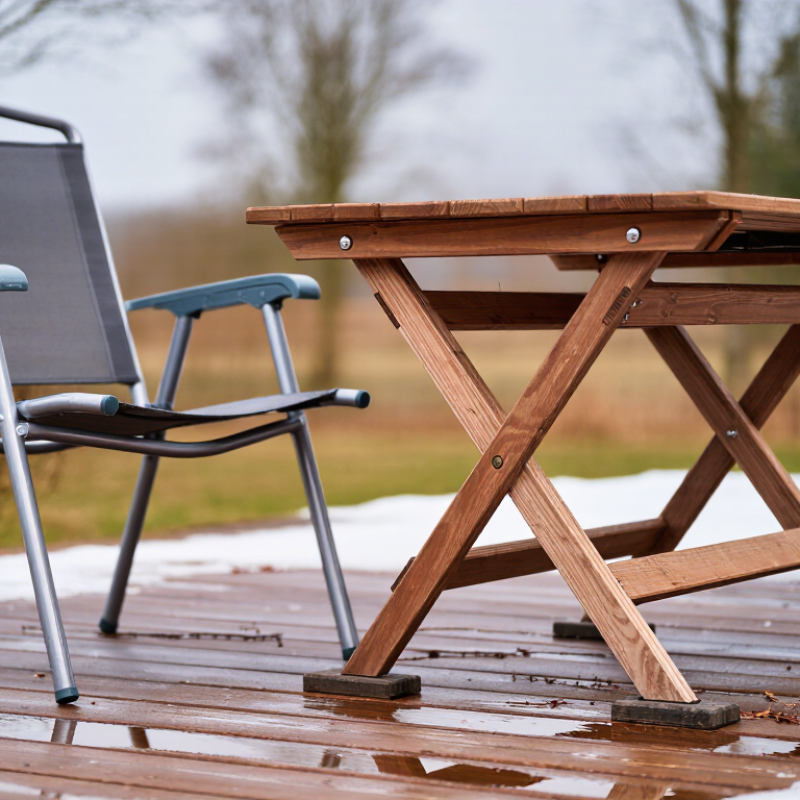
Can Folding Furniture Stay Outside in Winter?

What Winter Weather Does to Folding Furniture

Can Folding Furniture Stay Outside in Winter?

What Winter Weather Does to Folding Furniture

Winter weather affects folding furniture through moisture, freezing temperatures, wind, and weak sunlight. Snow may look harmless, but melting water can enter hinges, seams, and small cracks. When trapped water freezes, it expands and can loosen joints or split vulnerable materials. Repeated freezing and thawing causes more stress than one heavy snowfall.

Metal frames may develop rust, especially around scratched paint, bolts, and folding mechanisms. Aluminum usually resists rust, but it can still stain and weaken under harsh conditions. Wooden surfaces may absorb moisture, swell, and later crack as they dry. Plastic can become brittle in cold temperatures. Fabric seats often hold dampness, which encourages mildew and unpleasant odors.

I once underestimated a covered chair on a damp patio. The cover blocked snow, but condensation stayed underneath. By spring, the hinge had stiffened, and the fabric smelled musty. A cover is useful, but it is not a complete storage solution. Furniture should be cleaned, dried, and folded only after moisture disappears. Keep it raised from wet ground, and avoid placing heavy snow on top. Check hinges after storms, then remove ice gently instead of forcing the frame open.

Wind also matters. A lightweight chair can strike walls, fencing, or vehicles. Secure it carefully, but allow some airflow beneath the cover. My first storage plan was too optimistic. Winter exposes small maintenance mistakes.

Which Folding Furniture Materials Can Handle Outdoor Winter Conditions

Aluminum folding furniture usually handles winter well because it resists rust and remains relatively light. I have moved aluminum chairs from a wet patio without seeing stains or swelling. However, trapped water can freeze inside joints and make folding mechanisms stiff. Dry the hinges before storage.

Powder-coated steel offers greater weight and stability, but exposed scratches may develop rust. Inspect corners, screws, and scraped legs after storms. A small paint chip can become a larger problem during repeated freeze-thaw cycles. Steel is not automatically winter-proof. That assumption caused me trouble once.

Recycled plastic, resin, and high-density polyethylene can tolerate snow, damp air, and temperature changes. They will not absorb water like unfinished wood, although cheap materials may become brittle in severe cold. Teak and other dense hardwoods can survive outdoors when properly sealed, but folding joints need special attention. Water often collects around bolts and narrow gaps. Outdoor fabric is another weak point; it can hold moisture against the frame and develop mildew. I prefer breathable covers rather than airtight plastic sheets. They reduce direct exposure while allowing condensation to escape. Still, no material stays perfect without care. Clear snow, open the furniture occasionally, and let every surface dry before folding it away.

How to Prepare Folding Furniture Before Winter Storage

Can Folding Furniture Stay Outside in Winter?

Folding furniture can remain outside during mild winter weather, but storage is safer. Snow, freezing rain, and repeated thawing force moisture into joints, seams, and screw holes. The USDA Forest Products Laboratory’s Wood Handbook explains that wood expands and contracts as moisture changes. This movement can loosen connections over time. Metal frames face another problem: trapped water can accelerate corrosion, especially where protective coatings are scratched. Fabric may look dry while its inner layers remain damp.

How to Prepare Folding Furniture Before Winter Storage

Clean every surface with mild soap and water. Remove leaves from hinges and drainage gaps. Let the furniture dry completely, preferably for 24 hours in moving air. Inspect bolts, welds, stitching, and rubber feet. Tighten loose hardware carefully. Do not force stiff hinges. A light, material-safe lubricant may help, but excess oil collects dust. Fold each item only after drying. Store it under a breathable cover, not sealed plastic. The U.S. Environmental Protection Agency recommends indoor relative humidity around 30–50%. A dry, ventilated storage room helps maintain that range and reduces mildew risk.

Tips: Elevate furniture above concrete using a rack or wooden slats. Keep covers off the floor. Leave space between stacked pieces. Check them monthly after storms. I sometimes rush this inspection, and that is usually when rust begins unnoticed. Photographing damaged areas can make repairs easier later. Do not store cushions while they feel cool or heavy; hidden moisture is easy to miss.

How to Prepare Folding Furniture Before Winter Storage

The checklist shows the recommended completion level for protecting folding furniture during winter storage. Cleaning and completely drying the furniture helps prevent mold, while covering it and keeping it elevated reduces exposure to moisture, snow, and condensation.

Safe Ways to Protect Folding Furniture Left Outside

Can Folding Furniture Stay Outside in Winter?

Folding furniture can remain outdoors in winter, but exposure changes its risk. Moisture enters seams, hinges, fabric, and hollow frames. The U.S. Geological Survey explains that water expands by about 9% when it freezes. That pressure can widen tiny cracks and weaken joints. ASTM outdoor-exposure testing also uses repeated wet, dry, and freeze-thaw conditions because materials age through cycles, not one storm. In practice, a dry, elevated setup often matters more than a thick cover.

Tips: Clean off leaves and salt before storage. Let every surface dry completely. Fold chairs only after checking the hinges. Place them on a raised pallet, not directly on frozen ground. Use a breathable cover with ventilation gaps. Avoid sealing damp furniture inside plastic. Remove heavy snow promptly, especially from fabric seats. Check the furniture after each thaw.

Experience suggests that wind is often underestimated. A loose cover can flap against painted metal for hours, causing abrasion. Strong gusts can also bend legs or move furniture into walls. The National Weather Service records wind chill, not actual material damage, so its warnings do not replace a physical inspection. Keep lightweight pieces in a sheltered corner, and secure covers without crushing the frame. For cushions, indoor storage remains safer. I have found that “weather-resistant” does not mean winter-proof. That distinction is easy to miss. Inspect rust spots, split welds, and stiff hinges every few weeks. A small defect may look harmless, yet freezing water can enlarge it.

Can Folding Furniture Stay Outside in Winter? - Safe Ways to Protect Folding Furniture Left Outside

Furniture Material Winter Outdoor Suitability Main Winter Risks Recommended Protection Inspection Frequency Overall Risk
Powder-Coated Steel Can remain outside temporarily when the coating is intact and the furniture is kept dry. Chipped coating can allow moisture to reach the steel, causing rust. Freezing water may also collect inside joints and tubing. Clean and dry the frame, repair chips promptly, use a breathable cover, and store it under shelter during prolonged snow or freezing rain. Every 2–4 weeks and after storms Medium
Stainless Steel Generally suitable for outdoor winter use, although it still benefits from shelter and regular cleaning. Salt, de-icing chemicals, dirt, and trapped moisture can cause staining or surface corrosion, especially around fasteners. Rinse away salt and chemicals, dry thoroughly, lubricate moving joints with a suitable product, and cover without sealing in moisture. Monthly and after salted-road exposure Low to Medium
Aluminum Usually suitable for winter outdoor storage because it does not rust like ordinary steel. Surface oxidation, white corrosion deposits, weakened joints, and damage from snow or ice loads. Remove snow promptly, rinse off salts, inspect rivets and hinges, and store indoors or beneath a roof during severe weather. Monthly and after heavy snow Low
Teak or Other Outdoor Hardwood May stay outside if designed for outdoor use, but winter moisture and repeated freezing can accelerate weathering. Swelling, cracking, mold, mildew, discoloration, and loosening of wooden joints. Clean before winter, allow the wood to dry, elevate it from wet ground, use a breathable cover, and avoid placing it directly on snow or ice. Every 2–4 weeks Medium
Plastic or Resin Often suitable for outdoor winter storage, but performance depends on the material and construction quality. Cold temperatures can make some plastics more brittle. Ice, impact, and strong winds may cause cracks or tipping. Remove snow and ice without striking the surface, fold and secure the furniture, and keep it away from areas exposed to falling branches. After storms and temperature changes Low to Medium
Textile or Mesh Sling Not ideal for extended exposure to snow, freezing rain, or persistent dampness. Water retention, mildew, staining, weakened fibers, and freezing moisture that can damage seams or fabric coatings. Dry completely before folding, remove cushions and fabric parts, store them indoors, and use a breathable cover for the frame. After every wet or snowy event High
Outdoor Cushions Should generally be stored indoors during winter, even when the furniture frame remains outside. Moisture absorption, mildew, frozen filling, stains, fading, and damage to zippers or seams. Wash according to care instructions, dry fully, and store in a dry, ventilated indoor area rather than in a sealed damp container. Before storage and during long-term storage High
Mixed-Material Folding Furniture Suitability is determined by the least weather-resistant component. Different materials expand, contract, and retain moisture at different rates, increasing stress at connections. Protect fabric and wood components first, inspect all hinges and fasteners, and move the complete item under cover during severe winter conditions. Every 2–4 weeks Medium to High
Safety rule: Before leaving folding furniture outside, check the care instructions, lock the folding mechanism, remove accumulated snow, and keep the furniture away from standing water. A breathable cover is safer than an airtight cover because trapped condensation can promote mold and corrosion.

When to Move Folding Furniture Indoors or Replace It

Can Folding Furniture Stay Outside in Winter?

Folding furniture can survive mild winter weather, but “outdoor-rated” does not mean winterproof. Snow, freezing rain, and repeated thawing push moisture into seams and joints. Metal frames may rust around screws, while plastic can become brittle and crack under pressure. Fabric seats often stay damp longer than expected.

Move folding furniture indoors before prolonged freezing weather begins. Choose a dry, ventilated room, not a sealed plastic corner while the furniture is wet. Wipe every surface, open the joints, and let hidden areas dry completely.

I once stored a damp chair too quickly, and its fabric developed a stale odor within weeks. That mistake was avoidable.

A covered porch may work during short cold spells, but it offers limited protection from wind-driven rain.

Replace the furniture when damage affects safety, not appearance alone. Watch for loose rivets, bent hinges, deep rust, cracked plastic, or legs that wobble on level ground. Test each locking mechanism gently before use.

Surface rust can sometimes be cleaned and treated, but rust around load-bearing joints deserves more caution. A faded cushion is inconvenient; a weakened frame is different.

I have kept one chair longer than I should have because it still looked acceptable. It was not. If repairs feel uncertain, replacement is the more reliable choice.

FAQS

Can folding furniture stay outside during winter?

Yes, but exposure increases damage risks from moisture, freezing temperatures, wind, and weak sunlight. Snow is not harmless. Store furniture under a breathable cover, raised above wet ground, and away from heavy snow.

How does freezing water damage folding furniture?

Meltwater can enter hinges, seams, bolts, and tiny cracks. When trapped water freezes, it expands and stresses joints. Repeated freezing and thawing may loosen connections or split vulnerable materials.

Which folding furniture materials handle winter best?

Aluminum, recycled plastic, resin, and dense outdoor-grade plastic usually tolerate winter conditions well. Aluminum resists rust but may develop stains or stiff hinges. Plastic may become brittle during severe cold.

Can steel folding furniture remain outdoors in winter?

Powder-coated steel can handle cold weather, especially when its coating remains intact. Scratches around screws, corners, and legs may develop rust. Steel is not automatically winter-proof.

What happens to wooden folding furniture in damp winter weather?

Unsealed wood can absorb moisture, swell, and crack as it dries. Dense hardwood may survive outdoors when properly sealed. Folding joints still collect water around bolts and narrow gaps.

How should folding furniture be covered outside?

Use a breathable cover that blocks direct exposure while allowing condensation to escape. Airtight plastic may trap dampness underneath. Leave some airflow below the cover. My earlier storage plan was too optimistic.

How can I prevent mildew and odors on folding furniture?

Clean the furniture, remove snow, and let every surface dry completely before folding it. Fabric seats can hold moisture against the frame. Damp fabric may develop mildew and a musty smell. Dryness matters most.

How should I check folding furniture after a winter storm?

Inspect hinges, bolts, scratched paint, seams, and folding mechanisms. Remove ice gently instead of forcing the frame open. Keep heavy snow off the furniture. A stiff hinge needs patience.

Conclusion

Can folding furniture be left outside in winter? The answer depends on the weather, material, and level of protection. Snow, rain, freezing temperatures, ice, and repeated thawing can cause rust, cracks, swelling, fading, and weakened joints. Powder-coated metal and weather-resistant plastic may tolerate occasional exposure, while untreated wood, fabric, and poorly sealed metal usually require more care. Even durable furniture can suffer when moisture remains trapped in folds, cushions, or seams.

Before winter storage, clean and dry every surface, remove cushions and fabric parts, and check for loose screws or damage. Store the furniture in a dry, ventilated area, preferably raised off the floor and covered with a breathable protective cover. If it must remain outside, place it under a roof or sheltered structure, keep it elevated, allow airflow, and clear away snow regularly. Move furniture indoors when severe weather is expected, or replace it when rust, cracking, mold, or unstable frames make it unsafe to use.

Charlotte

Charlotte

Charlotte is a seasoned marketing professional with a deep understanding of the company's portfolio and a passion for elevating its presence in the market. With a keen eye for detail and a commitment to excellence, she ensures that our professional blog is regularly updated with insightful articles......